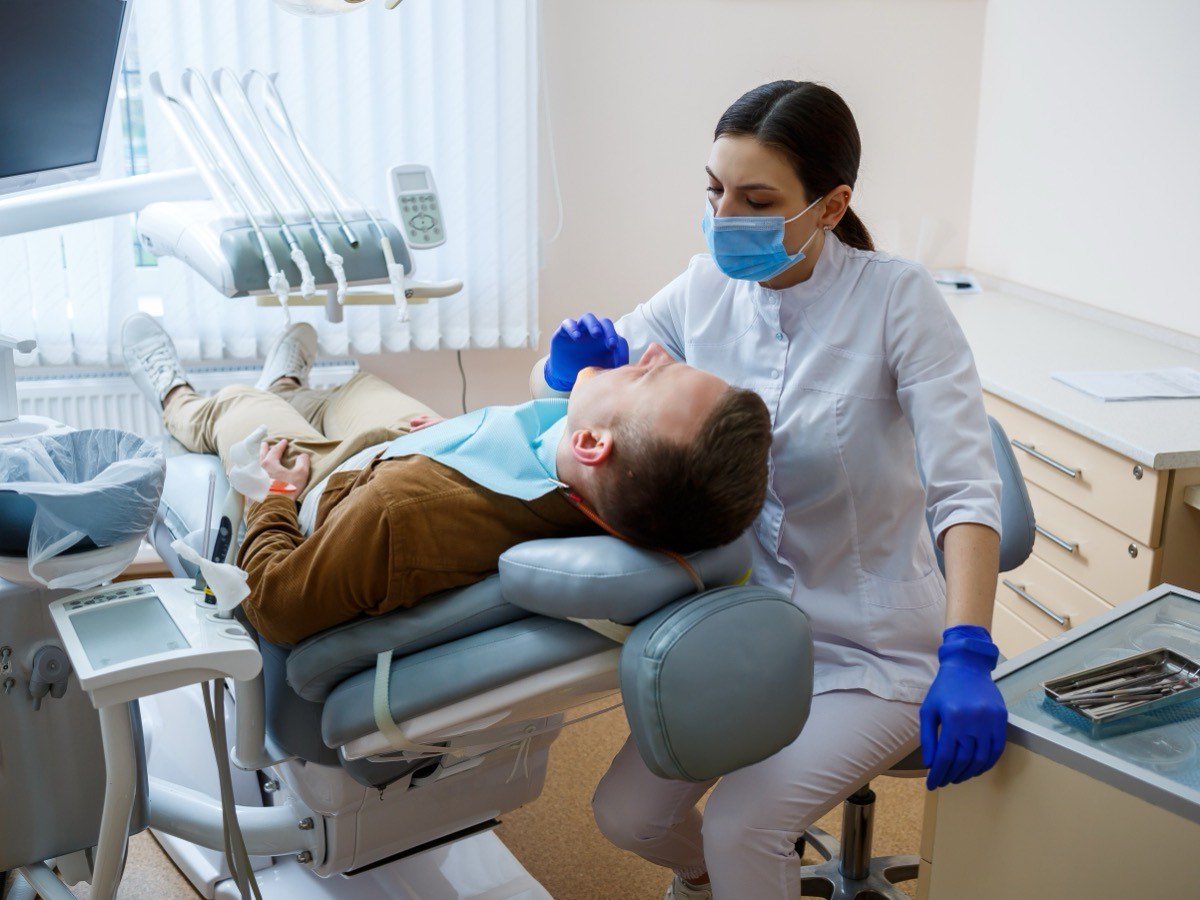
Our on-site surgical operatory
Many general practices refer every surgical case out. Having a dedicated operatory means fewer handoffs — your records, imaging and treatment plan stay in one place, and continuity is maintained from assessment through to healing.
- A dedicated surgical room, separate from standard treatment rooms
- 3D imaging for planning, so root position and nerve proximity are known before we begin
- Local anaesthetic, with nitrous oxide available for anxious patients
- Surgical-grade instrument protocols
There are cases we will refer, and we will say so directly — complex impactions close to the inferior alveolar nerve, patients with medical histories that call for a hospital setting, or anyone needing deeper sedation than nitrous oxide provides. We maintain referral relationships across the GTA for exactly those situations. See our sedation and comfort page for what we do and do not offer.
Wisdom teeth removal
Third molars usually arrive between seventeen and twenty-five, often into a jaw with no room left for them. Not every wisdom tooth needs removing — a fully erupted one that is cleanable and not causing problems can be monitored and left alone.
Reasons removal is usually recommended
- Impaction — the tooth cannot fully erupt and presses against the molar in front
- Recurrent infection — the gum flap over a partly erupted tooth traps bacteria and inflames repeatedly
- Decay that cannot be restored — the position often makes cleaning and repair impractical
- Cysts or damage to the neighbouring tooth — visible on imaging before symptoms appear
- Crowding pressure — where it interferes with planned orthodontic treatment
A 3D scan shows exactly where the roots sit relative to the nerve in the lower jaw and the sinus above. That informs both the surgical approach and whether the case is one we should refer.
Simple and surgical extractions
Simple extraction
For a tooth that is fully erupted and accessible. Under local anaesthetic, the tooth is loosened and lifted out. You feel pressure, not pain.
Surgical extraction
Required where a tooth is broken at the gumline, impacted, or has roots that make straightforward removal unlikely. It involves a small incision, and sometimes sectioning the tooth so it can be removed in pieces with less force on the surrounding bone.
When we try to save the tooth instead
Extraction is not automatically the answer. Root canal therapy, a crown, or periodontal treatment can often keep a tooth that looks unpromising. We will lay out both routes — what saving it involves and how long it is likely to last, against what replacing it would mean.
Bone grafting and site preservation
Bone around a socket begins to resorb as soon as a tooth is removed, and most of that change happens in the first year. Where a dental implant is planned for the site, placing graft material at the time of extraction preserves the ridge and often avoids a larger graft later.
- Socket preservation — graft material placed at the time of extraction
- Ridge augmentation — rebuilding width or height where bone has already been lost
- Sinus lift — creating bone height in the upper back jaw, where the sinus limits implant length
Not every extraction needs grafting. It is worth doing when an implant is the plan, or when the ridge shape matters for a future restoration.
Recovery and aftercare
What happens in the days after surgery affects the outcome as much as the procedure. You will be given written instructions specific to your case; the general shape is consistent.
The first 24 hours
- Bite firmly on the gauze provided to control bleeding
- Use cold compresses on the outside of the face to limit swelling
- Avoid rinsing, spitting, straws and smoking — all can dislodge the clot the socket needs to heal
- Stay with soft, cool foods and keep hydrated
The following days
- Begin gentle warm salt-water rinses after the first day
- Keep brushing your other teeth, avoiding the surgical site itself
- Expect swelling to peak around day two or three, then settle
- Take pain relief as directed rather than waiting for discomfort to build
Contact us if bleeding does not settle, if pain increases sharply after day three — which can indicate a dry socket — or if you develop a fever. These are treatable, and easier to treat early.
Oral surgery FAQ
Does having a tooth out hurt?
+The procedure itself should not hurt — local anaesthetic makes the area numb, and what you feel is pressure and movement. Discomfort afterwards, as the anaesthetic wears off, is normal and usually manageable with over-the-counter pain relief.
Do I have to have my wisdom teeth removed?
+Not necessarily. A wisdom tooth that has erupted fully, can be cleaned properly and is causing no problems can be monitored. Removal is recommended when there is impaction, recurrent infection, decay that cannot be restored, or damage to the tooth in front.
How long is recovery after an extraction?
+Most people return to normal activity within two to three days after a simple extraction. Surgical extractions and wisdom teeth take longer — swelling usually peaks at day two or three and settles over the following week. Full healing of the socket takes several weeks.
Will I be put to sleep?
+We work under local anaesthetic, with nitrous oxide available if you would find it easier. We do not offer oral sedation or general anaesthesia. If your case genuinely requires deeper sedation, we will refer you to a colleague who provides it.
What is a dry socket?
+It happens when the blood clot protecting the healing socket is lost too early, exposing bone. The sign is pain that worsens sharply around day three rather than improving. It is treatable — contact us rather than waiting it out.