Why your at-home routine matters more than you think
Your dentist sees you for approximately 1–2 hours per year. That leaves 8,758 hours where your oral health is entirely in your hands. Your twice-daily brushing and daily flossing routine is the single most impactful thing you can do for your teeth — more than any treatment, product, or technology available in a dental office.
The good news: a truly excellent oral hygiene routine takes less than 5 minutes per day and costs almost nothing. The challenge is doing it correctly and consistently.
How to brush correctly — the technique your Stouffville dental hygienist recommends
Brushing seems intuitive, but most adults develop ineffective habits over time. Here is the technique recommended by dental professionals:
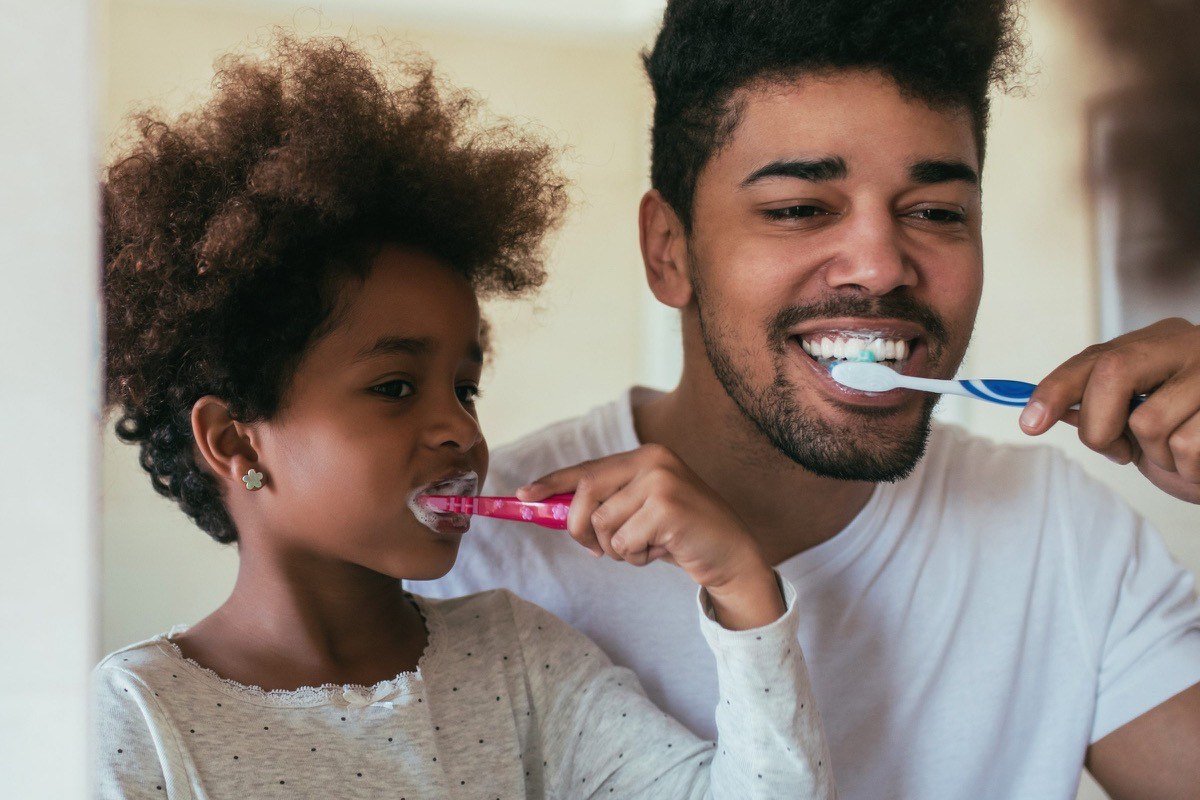
Step-by-step brushing technique
- Choose the right brush: Soft-bristled only — medium and hard bristles damage enamel and cause gum recession over time. Replace your brush every 3 months or sooner if bristles are frayed.
- Use the right amount of toothpaste: A pea-sized amount of fluoride toothpaste for adults. More is not better.
- Angle at 45 degrees: Hold your brush at a 45-degree angle to the gumline — this is where plaque accumulates most. This is not the angle most people naturally use.
- Use gentle circular motions: Move in small, gentle circles. Scrubbing back and forth (especially hard) is the most common brushing mistake — it wears down enamel.
- Cover all surfaces: Outer surfaces, inner surfaces, and the chewing surfaces of all teeth. Don't neglect the inner surfaces of the front teeth — tilt your brush vertically for these.
- Brush for 2 full minutes: Divide your mouth into four quadrants and spend 30 seconds on each. Use a timer.
- Brush your tongue: The tongue harbors bacteria that cause bad breath and recontaminate cleaned teeth.
- Spit — don't rinse: After brushing, spit out the toothpaste but don't rinse with water. This leaves a thin layer of fluoride on your teeth to continue working.
Research consistently shows oscillating-rotating electric toothbrushes remove significantly more plaque than manual brushes — especially for patients who struggle with technique. If you invest in one dental product, make it a quality electric toothbrush (Oral-B or Sonicare are the most studied brands). That said, a manual brush used with excellent technique is still very effective.
How to floss correctly — the step most people skip
Flossing is the most skipped step in oral hygiene — and the one with the greatest consequences when neglected. Approximately 35% of your tooth surface lives between your teeth, completely unreachable by any toothbrush. These contact points are where cavities and gum disease most commonly begin.
Step-by-step flossing technique
- Use enough floss: Cut 40–45 cm (about 18 inches) of floss. Wind most around your middle fingers, leaving 3–5 cm to work with.
- Guide gently between teeth: Use a gentle sawing motion — never snap floss into the gums, which causes damage and pain.
- Curve into a C-shape: When the floss reaches the gumline, curve it into a C-shape around the tooth and slide it gently below the gumline.
- Scrape up and down: Move the floss up and down against the side of each tooth — this cleans the surface and removes plaque below the gumline.
- Use a fresh section for each tooth: Advance to clean floss as you move from tooth to tooth — don't redistribute bacteria.
- Floss before brushing: This loosens debris that fluoride toothpaste can then reach and protect.
Flossing alternatives (for those who struggle with string floss)
- Floss picks / interdental picks — easier to use, especially for those with limited dexterity
- Water flossers (Waterpik) — excellent for cleaning around braces, implants and bridges; good supplement but not a full replacement for string floss
- Interdental brushes — highly effective for larger gaps between teeth, especially for patients with gum recession
If your gums bleed when you start flossing, don't stop — this is a sign of inflammation from lack of flossing, not that flossing is harming you. With consistent daily flossing, bleeding typically stops within 1–2 weeks as your gums become healthier. If bleeding persists beyond 2 weeks, contact Stouffville Dental Studio — our dental hygienist will assess your gum health.
Mouthwash — should you use it, and which kind?
Mouthwash is a supplement to brushing and flossing, not a replacement. Used correctly, it provides real benefits — but only if you're already brushing and flossing consistently.
- Fluoride mouthwash — strengthens enamel and reduces cavity risk. Use at a different time than brushing (e.g., after lunch) to provide fluoride exposure at an additional time of day.
- Antibacterial mouthwash (chlorhexidine) — prescribed for patients with active gum disease or higher infection risk. Not for long-term daily use without guidance.
- Alcohol-free formulas — preferred for most patients; alcohol-based mouthwashes cause dry mouth with long-term use, which actually increases cavity risk.
- Cosmetic mouthwashes — mask bad breath temporarily but provide no meaningful dental protection.
Your complete daily oral hygiene checklist
- Floss all teeth thoroughly — once per day (ideally before bed)
- Brush with a soft-bristled brush at 45 degrees for 2 full minutes — twice daily
- Use a fluoride toothpaste — always
- Spit after brushing — don't rinse with water
- Brush or scrape your tongue
- Use fluoride or antibacterial mouthwash as directed
- Stay hydrated — saliva is your mouth's natural defence
- Limit snacking — frequent eating keeps pH levels low and increases decay risk
- See your dental hygienist every 6 months for a professional cleaning and your dentist for a comprehensive exam
Oral Hygiene FAQ — Your Stouffville Dental Team Answers
How long should I brush my teeth?
+Brush for a full 2 minutes, twice daily — once in the morning and once before bed. Most people brush for only 45 seconds, which leaves significant plaque on the teeth. Use a timer, an electric brush with a built-in timer, or a 2-minute song to ensure you brush long enough every time.
Should I floss before or after brushing?
+Floss before brushing. Flossing first dislodges food and plaque from between teeth, which your toothbrush then sweeps away. It also allows fluoride from your toothpaste to penetrate better between teeth, where it's most needed.
Is an electric toothbrush really better?
+Research shows oscillating-rotating electric toothbrushes (like Oral-B) remove significantly more plaque and reduce gingivitis more effectively than manual brushes in clinical studies. They are especially helpful for patients who rush brushing or have limited dexterity. That said, a manual brush used with correct technique for 2 minutes is still very effective.
Should I rinse my mouth after brushing?
+No — spit, don't rinse. Rinsing with water immediately after brushing washes away the fluoride from your toothpaste before it has time to strengthen your enamel. Just spit out the excess toothpaste and leave the thin fluoride film on your teeth.
Can mouthwash replace flossing?
+No. No mouthwash — regardless of how it's marketed — can remove plaque from between teeth or below the gumline the way floss does. Mouthwash is a valuable supplement to your routine but is not a substitute for flossing. Use both.