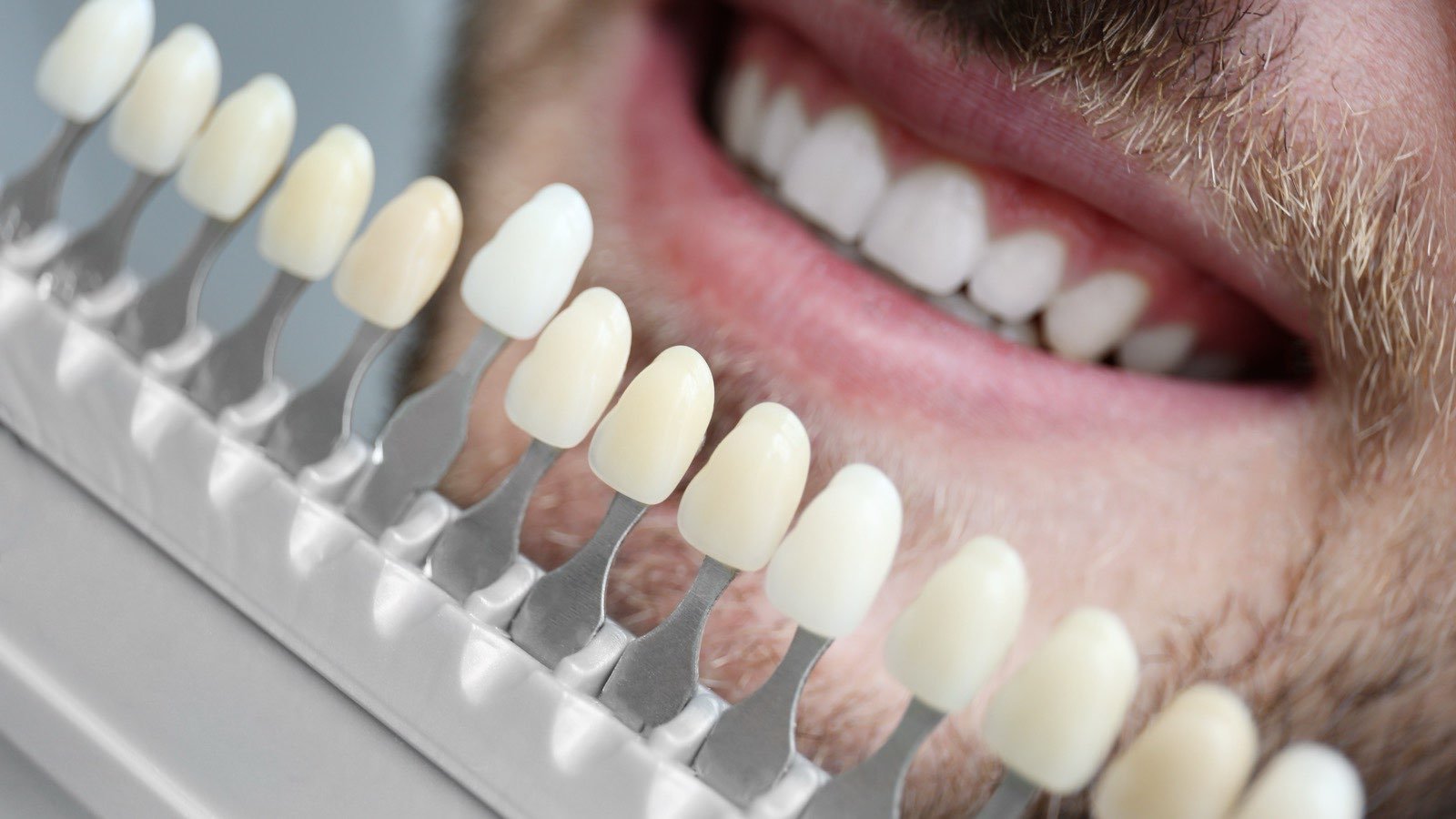
How we approach cosmetic treatment
A cosmetic result that fails in three years is not a good result. Before recommending anything, we look at how your teeth meet, whether you grind, and whether the tooth structure underneath is sound. Those factors decide what will still look right years later.
That sometimes means recommending less treatment than you came in expecting — whitening and a small amount of bonding rather than a set of veneers, for instance. It occasionally means addressing bite or gum health first.
We show you the plan before we begin, including what each option involves, what it does not fix, and what maintenance it will need.
Teeth whitening
Whitening lifts stain from within enamel using a peroxide-based gel. It works well on the yellowing that comes with age, coffee, tea, red wine and tobacco. It does not change the colour of crowns, veneers or fillings, which is why sequencing matters when you are having other work done.
In-office whitening
A stronger gel applied under supervision, with your gums protected, in a single appointment. Suited to patients who want a change quickly.
Take-home whitening
Custom trays made from impressions of your teeth, with a gentler gel used over one to two weeks at home. The gradual approach tends to produce less sensitivity, and the trays can be reused for occasional top-ups.
Sensitivity during whitening is common and usually temporary. Tell us if you already have sensitive teeth — it changes which approach and concentration we recommend.
Porcelain veneers and composite bonding
Porcelain veneers
Thin porcelain shells bonded to the front of a tooth. They address shape, chips, stubborn discolouration that does not respond to whitening, and small gaps. Placement usually requires removing a thin layer of enamel, which makes the treatment irreversible — a point we make sure you understand before proceeding.
Composite bonding
Tooth-coloured composite shaped directly onto the tooth in a single visit. It is more conservative than a veneer, often needs little or no enamel removal, and is straightforward to repair. Composite picks up stain more readily than porcelain and does not last as long, so it suits smaller corrections and patients who want to keep options open.
Which of the two is appropriate depends on how much of the tooth needs changing, the state of the existing enamel, and whether you grind your teeth.
Tooth-coloured fillings, and where restorative work takes over
Tooth-coloured fillings
Composite fillings bonded directly to the tooth and matched to its shade. Bonding allows a more conservative preparation than the mechanical retention older amalgam fillings required, so less healthy tooth is removed to place one.
When a filling is no longer enough
There is a point at which too little sound tooth remains for a filling to hold reliably — after a root canal, a significant fracture, or the failure of a very large old restoration. At that point the tooth needs something that covers and protects it rather than sits inside it: a crown, an inlay or an onlay.
That is a different kind of decision from a cosmetic one, and it has its own page. See crowns and bridges for what each option involves, which materials suit which teeth, and how a bridge compares with a dental implant when a tooth is missing altogether.
Planning a full smile makeover
A makeover combining several treatments is planned as one sequence rather than a series of separate decisions. The order matters: gum health and bite are addressed first, whitening comes before any shade-matched work, and definitive restorations come last so everything matches.
- A full examination, photographs and digital records
- Discussion of what you want changed, in your words
- A written plan setting out each stage, the sequence, and what it involves
- Any preparatory treatment — gum therapy, bite adjustment, replacing failing restorations
- The cosmetic work itself, staged so shades are matched at the right point
- A maintenance plan, because cosmetic work needs upkeep
We do not promise a particular outcome before assessing your teeth. What we will do is show you honestly what is achievable in your case and what each route requires.
Cosmetic dentistry FAQ
How long does teeth whitening last?
+It varies with diet and habits. Coffee, tea, red wine and tobacco bring stain back faster. Many patients maintain their result with occasional top-ups using custom trays. Whitening is a maintenance treatment, not a permanent change.
Do veneers damage your natural teeth?
+Porcelain veneers usually require removing a thin layer of enamel, and enamel does not grow back — so the tooth will always need a veneer or crown from that point on. This is why we discuss more conservative options such as bonding first where they would achieve what you want.
Will whitening work on my crowns or fillings?
+No. Whitening gel only affects natural tooth structure. Existing crowns, veneers and composite fillings keep their original shade, which can leave them mismatched afterwards. Where visible restorations are present we usually whiten first, then replace them to match.
Is cosmetic dentistry covered by insurance?
+Purely cosmetic treatment is generally not covered. Treatment that restores function — a crown on a fractured tooth, for example — often is, at least in part. We provide a written plan with procedure codes so you can check with your insurer in advance.
How do I know which treatment is right for me?
+That is what the consultation is for. It depends on the condition of the underlying tooth, your bite, whether you grind, and what specifically you want changed. We will tell you if a simpler treatment would achieve the same thing.