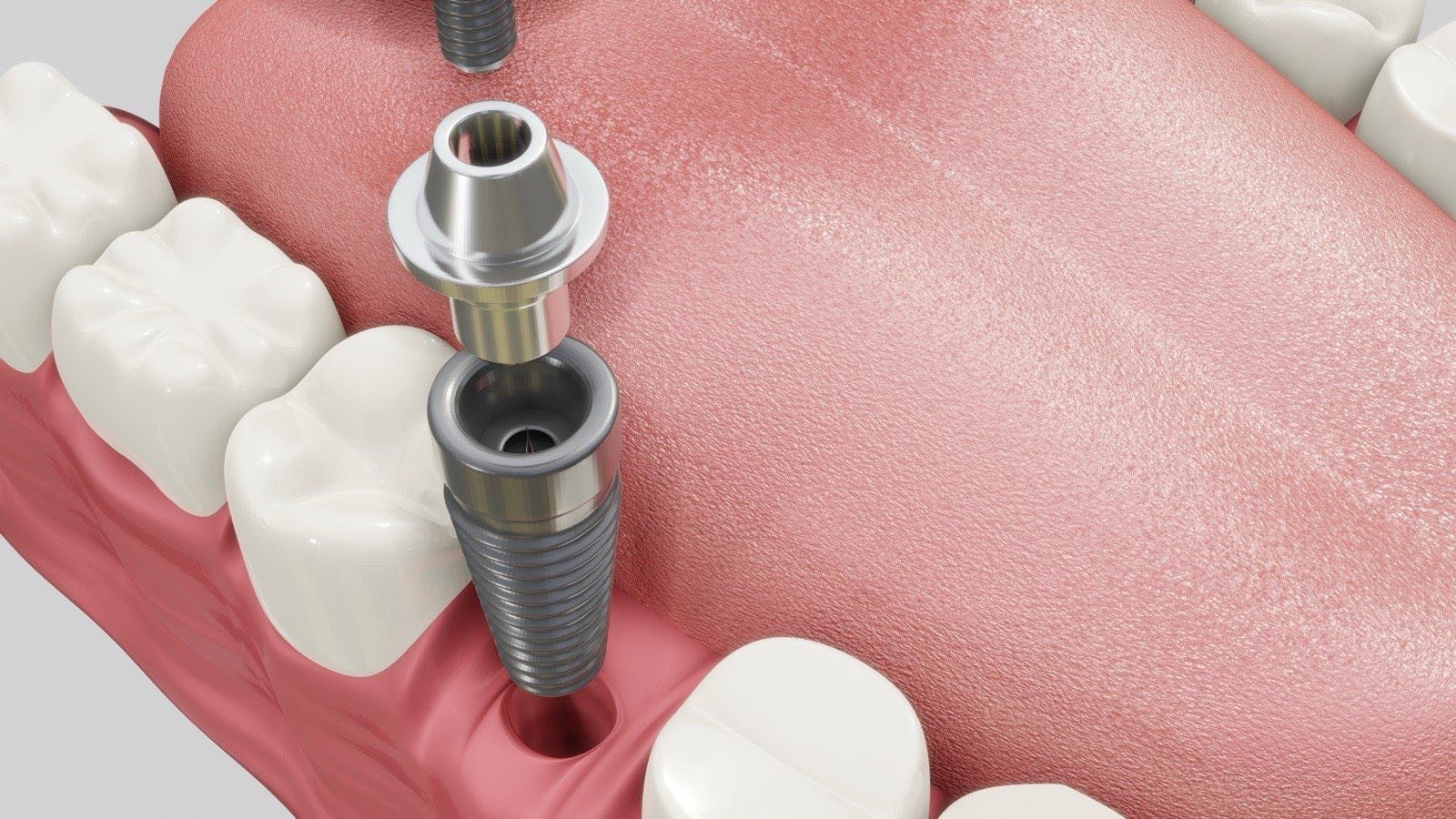
What a dental implant actually is
An implant has three separate parts. The fixture is a small titanium post placed into the jawbone where the tooth root used to sit. The abutment connects that post to the visible restoration. The crown is the part you see and chew with.
What makes an implant different from a bridge or a denture is osseointegration — over several months, bone grows directly onto the titanium surface and locks it in place. The implant is anchored in bone rather than resting on the gums or clasping onto neighbouring teeth.
That distinction matters for the long term. When a tooth is lost, the bone that used to support it begins to resorb. An implant transmits chewing forces into the bone the way a natural root does, which helps maintain the bone around it.
Are you a candidate for dental implants?
Most adults with a missing tooth are candidates. Assessment comes down to a few practical questions we work through at your consultation:
- Is there enough bone volume? A 3D scan shows the height and width of bone available. Where there is not enough, bone grafting can build the site up first.
- Are the gums healthy? Active gum disease is treated before implant placement, because the same bacteria that damage bone around teeth affect bone around implants.
- Is your general health stable? Conditions such as uncontrolled diabetes, and habits such as smoking, affect healing and are discussed openly before we plan treatment.
- Has jaw growth finished? For younger patients we usually wait until growth is complete before placing an implant.
If an implant is not the right answer for your situation, we will say so and walk you through the alternatives — a bridge, a partial denture, or in some cases leaving the space as it is.
The implant process, step by step
Implant treatment is a sequence spread over months rather than a single appointment. Healing between stages is what makes the result durable.
1. Consultation and 3D planning
We take a low-dose 3D scan and digital impressions, review your medical history, and map exactly where the implant should sit relative to bone, nerves and the teeth on either side. You see the plan before anything is scheduled.
2. Preparing the site, if needed
Where bone volume is insufficient, bone grafting or a sinus lift is completed first and left to heal. Not every case needs this step.
3. Placing the implant
The fixture is placed in our on-site surgical operatory under local anaesthetic, with nitrous oxide available if you would find it easier. Most single-implant placements take under an hour.
4. Osseointegration
Bone integrates with the implant surface over roughly three to six months, depending on the site and your healing. A temporary tooth can usually be worn during this period.
5. The final restoration
Once integration is confirmed, the abutment and final crown are fitted. The crown is made to match the shade and contour of your surrounding teeth.
Types of implant restoration
Single-tooth implant
One implant supporting one crown. It replaces the tooth without altering the healthy teeth on either side — the main advantage over a conventional bridge, which requires those neighbours to be prepared.
Implant-supported bridge
Two or more implants supporting a span of several teeth. Useful where consecutive teeth are missing and placing an implant for each one is unnecessary.
Full-arch implant restoration
A full set of fixed teeth supported by four to six implants per arch. For patients currently in dentures, this removes the movement and palate coverage that make conventional dentures difficult to live with.
Implant-retained denture
A removable denture that clips onto implants. It is a middle option — considerably more stable than a conventional denture, and less involved than a fixed full-arch restoration.
Caring for an implant
An implant crown does not decay. The bone and gum around it, however, remain susceptible to inflammation — peri-implantitis is the implant equivalent of gum disease, and it is the most common reason implants fail years after placement.
- Brush and clean between the implant and neighbouring teeth daily, as you would a natural tooth
- Keep to your recommended hygiene appointments so the tissue around the implant is monitored
- Tell us about grinding or clenching — a night guard protects the restoration
- If you smoke, understand that it measurably increases the risk of implant complications
For more on protecting the bone and gum that support both teeth and implants, see our gum disease prevention guide.
Dental implant FAQ
How long do dental implants last?
+The titanium fixture is designed to be permanent, and long-term studies report high survival rates over ten years and beyond. The crown attached to it is a wearing part and may need replacement over time, much like any other restoration. Outcomes depend heavily on gum health, home care and regular monitoring.
Is getting a dental implant painful?
+Placement is done under local anaesthetic, so you should not feel pain during the procedure. Most patients describe the recovery as more comfortable than they expected — comparable to an extraction. Nitrous oxide is available if you find dental treatment stressful.
How long does the whole process take?
+From placement to final crown, typically three to six months, because bone needs time to integrate with the implant. Cases needing bone grafting take longer. We give you a specific timeline for your situation at the consultation.
Can I get an implant if I have been missing the tooth for years?
+Often yes, though bone tends to resorb in the years after a tooth is lost. A 3D scan shows how much bone remains. Where it is insufficient, grafting can rebuild the site before placement.
Will my insurance cover dental implants?
+Coverage varies considerably between plans. We prepare a written treatment plan with the relevant procedure codes so you can confirm your benefits with your insurer before committing to treatment.